
Yoga + Strength Training + Pilates = Lasting Results
TL;DR
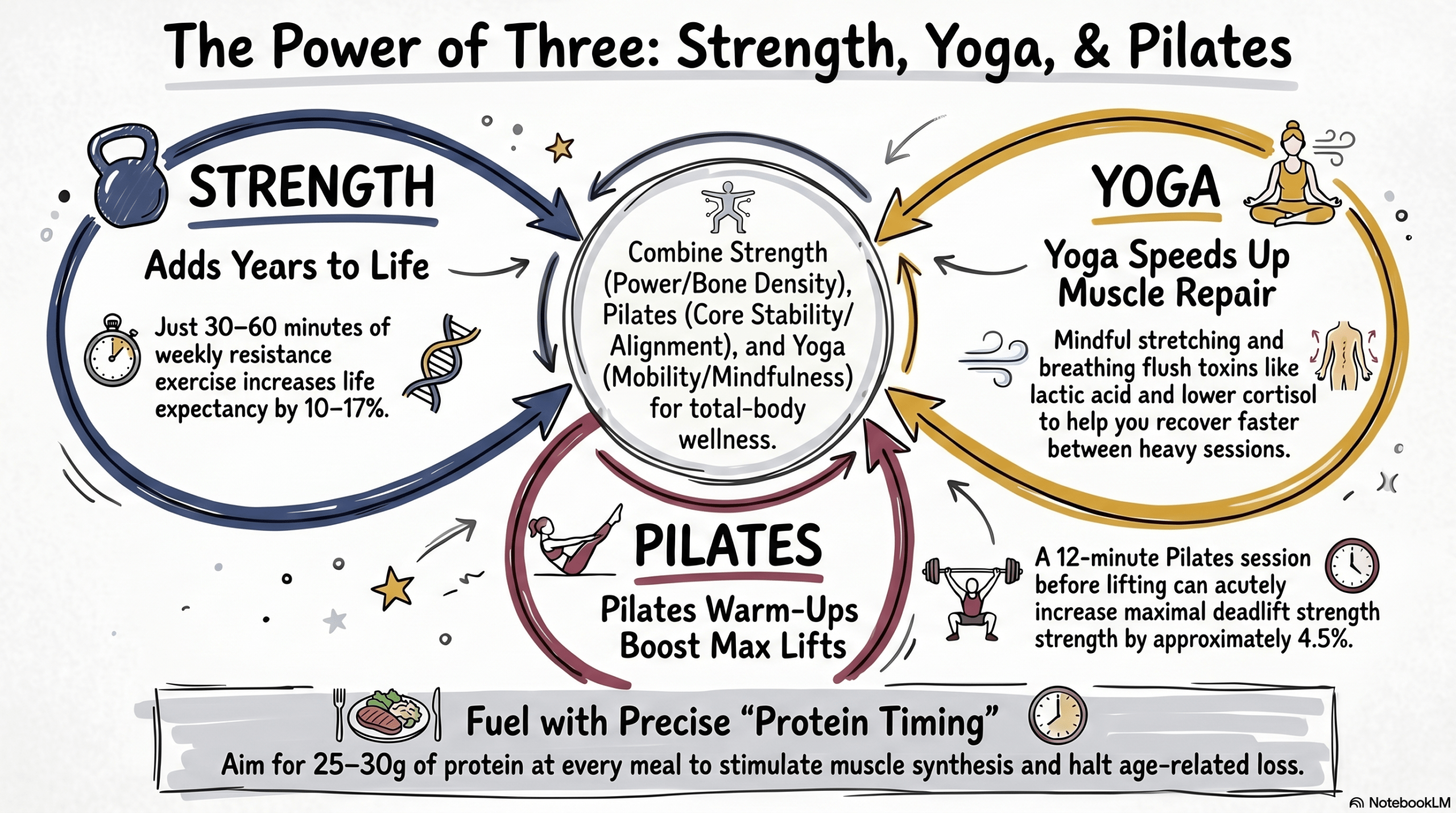
A single-mode workout routine can lead to plateaus and decline, but combining strength training, Pilates, and yoga creates a powerful system for longevity, resilience, and performance. Just 30–60 minutes of strength training weekly—paired with proper protein intake—can significantly extend lifespan, while Pilates boosts strength efficiency and yoga accelerates recovery. Together, this trifecta builds a body that’s not only stronger, but more balanced, injury-resistant, and sustainable for decades.
The High-Performance Trifecta: Why the Synergy of Strength, Yoga, and Pilates is the Ultimate Longevity Secret. It’s not just about recent trends or fads, it’s backed by science.
1. Why Your One-Dimensional Routine is Holding You Back
For many fitness enthusiasts, the workout routine eventually becomes a “monoculture”—a repetitive cycle of the same treadmill miles or the same weight circuit. But as the years progress, many of us encounter a frustrating paradox: despite the effort, we hit plateaus or, worse, begin to feel the creeping “fear of decline” through nagging joint pain and loss of vigor. The reality is that true vitality—the kind that keeps you powerful and agile into your 80s—cannot be found in a single discipline. The secret to a longer, more resilient life lies in a specific trifecta of movement and timing. By bridging the raw power of resistance training with the core precision of Pilates and the restorative mobility of yoga, you stop just “exercising” and start building a high-performance vessel that lasts.
2. The 60-Minute Longevity Miracle (and the Protein Secret)
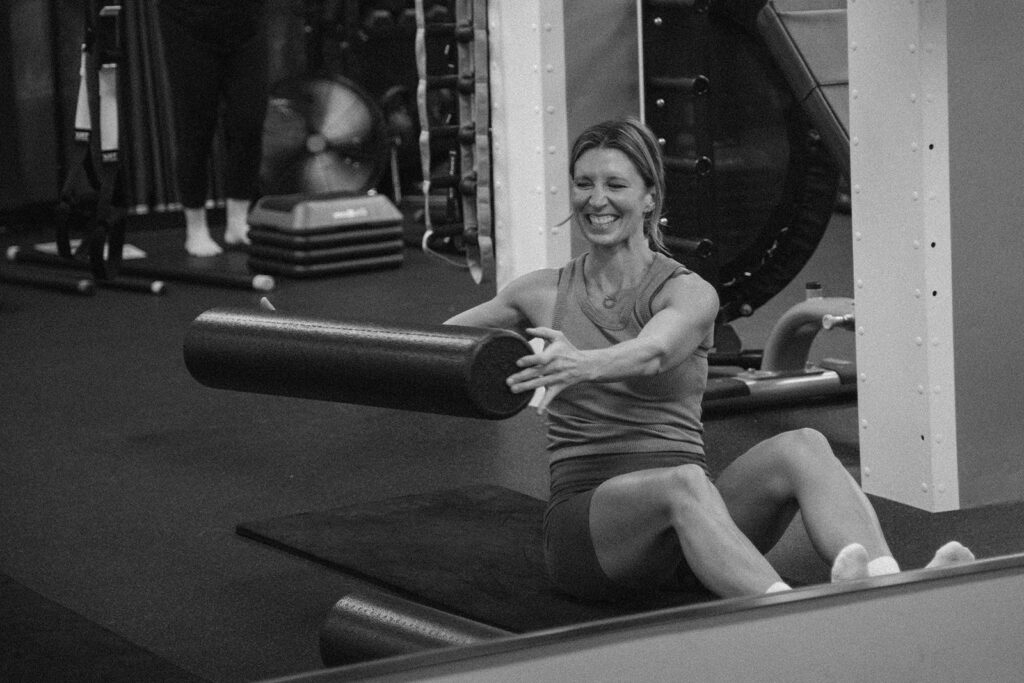
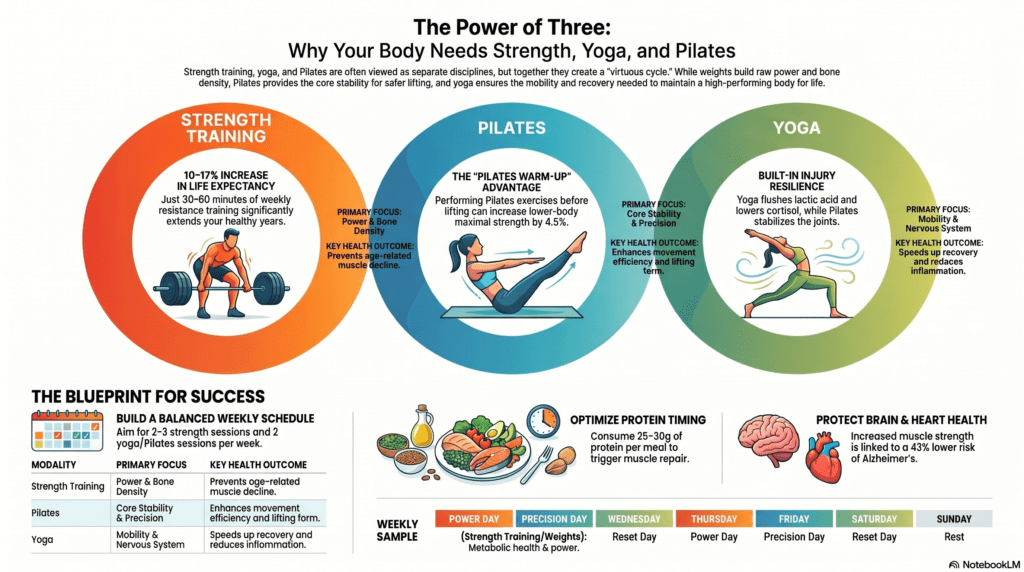
You don’t need to spend hours at the gym to purchase a biological insurance policy. According to data highlighted by AARP, a review of 16 global studies revealed that just 30 to 60 minutes of resistance training per week can increase life expectancy by 10 to 17 percent. It is a striking finding that proves consistency and quality far outweigh grueling duration.
But here is the catch: movement is only half the equation. To actually realize these gains, you must feed the biological machinery of repair. The science detailed in The Whole Body Reset emphasizes “protein timing.” To stimulate protein synthesis—the process of repairing and building muscle—women 50 and older require at least 25 grams of protein per meal, while men require 30 grams. As the authors of The Whole Body Reset note:
“Studies show that when people in their 60s combine this style of eating, known as ‘protein timing,’ with resistance exercise, their bodies respond as if they were in their 20s.”
By hitting these specific thresholds at every meal, you provide the raw materials to ensure your 60 minutes of weekly training translates into life-extending muscle mass rather than just wasted effort.
3. The Brain-Body Connection: Muscle as Medicine for the Mind
Muscle is often dismissed as a matter of vanity, but in the world of functional longevity, it is recognized as a critical neurological safeguard. A study involving 970 seniors with no initial cognitive decline found a startling correlation: for every 1-point increase in muscle strength, the risk of developing Alzheimer’s disease dropped by 43 percent. This suggests that muscle tissue is more than a mechanical lever; it is a vital component of your body’s defense against cognitive decay. Strengthening your extremities effectively bolsters your mind’s resilience.
4. The "Acute" Pilates Secret: A 4.5% Instant Strength Boost
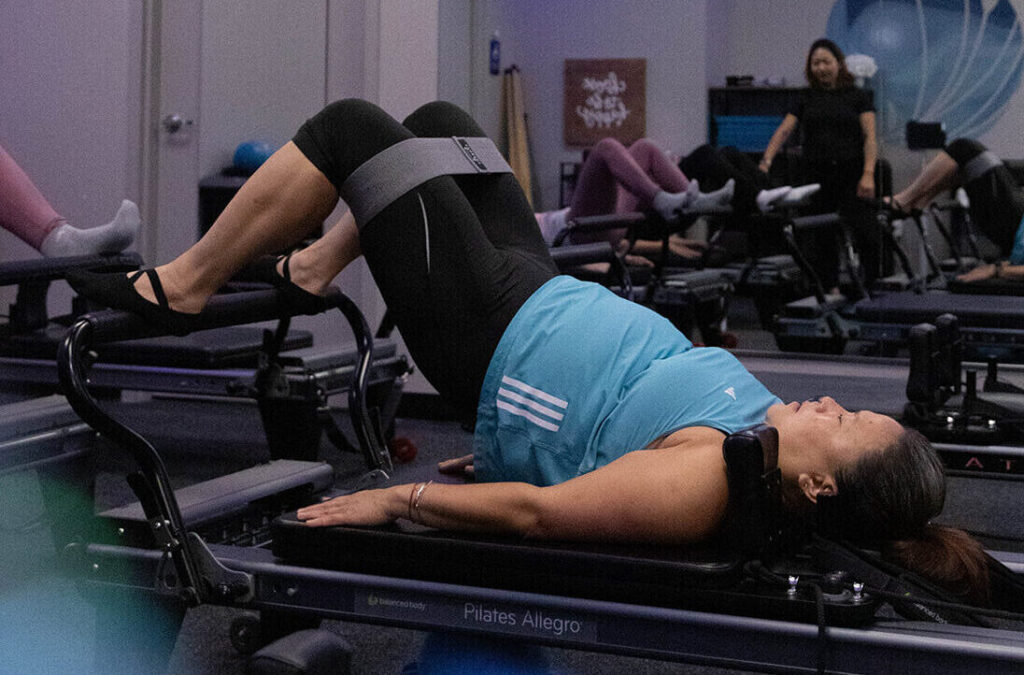
While Pilates is often perceived as a “low-intensity” flow, research published in the International Journal of Exercise Science reveals it to be a massive performance multiplier. In a study of 17 healthy people, researchers found that a 12-minute Pilates core activation routine resulted in a 4.5% (approximately 7.2kg) increase in maximal deadlift strength compared to a traditional cardio warm-up.
This “acute” boost is rooted in the stabilization of the Lumbo-Pelvic-Hip (LPH) complex—a collection of 29 muscles that form the body’s anatomic core. By increasing “trunk stiffness” through Pilates, you create a rigid, stable foundation. This stable base allows your extremities to generate and transfer force more efficiently, proving that a strong core is the literal bedrock of raw power.
5. The "Whip-Like" Efficiency of Olympians
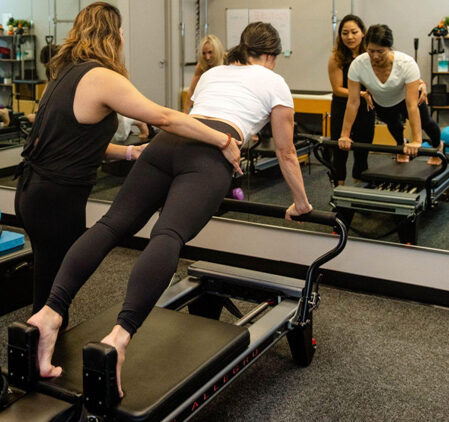
Elite athletes don’t just aim for power; they aim for efficiency, eliminating “energy leaks” that lead to fatigue and injury. Olympic swimmers and professional athletes utilize Pilates to develop “whip-like” motions, allowing them to move through their environment with minimal wasted energy. This focus on the “fine details”—such as proper shoulder alignment and core engagement during leg movements—is what separates a gold medalist from the rest of the pack.
Twelve-time Olympic medalist Natalie Coughlin highlights the importance of this specific training:
“Pilates is about strengthening the whole body… It focuses on the muscles that are often ignored in traditional training, but that are crucial for injury prevention and improving technique.”
For the longevity-minded adult, moving “smarter” prevents the injury-related setbacks that sideline most fitness enthusiasts, ensuring you stay in the game for decades rather than just a season.
6. The Recovery Paradox: Slowing Down to Grow Stronger
The growth you seek doesn’t actually happen during your workout; it happens in the quiet hours afterward. Yoga serves as the ultimate “active recovery” tool. Unlike passive rest, yoga uses gentle stretching and mindful breathwork to increase circulation, delivering oxygen and nutrients to tired tissues to repair micro-tears faster.
Furthermore, yoga is a powerful tool for hormonal management. It helps flush lactic acid from the muscles and reduces the stress hormone cortisol, which can otherwise interfere with muscle repair and delay healing. By improving sleep quality and calming the nervous system, yoga ensures your body remains in a “repair-friendly” state, allowing you to return to your next strength session with renewed resilience.
7. Designing Your "Perfect Match" Week
To move from theory to action, you need a rhythm that respects the body’s need for both load and release. Following the framework used by experts like Kristin McGee and the philosophies of The Well Studio, here is a balanced, high-performance weekly schedule:
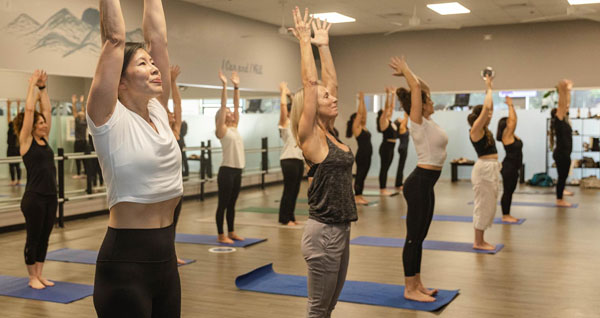
- Monday: Yoga – Start the week grounded, focusing on breath and mobility to set a mindful tone.
- Tuesday: Strength – Focused resistance training to build power and bone density.
- Wednesday: Yoga – Mid-week rebalance to create space in the joints and flush metabolic waste.
- Thursday: Strength – A second session to hit the 60-minute weekly “longevity miracle” threshold.
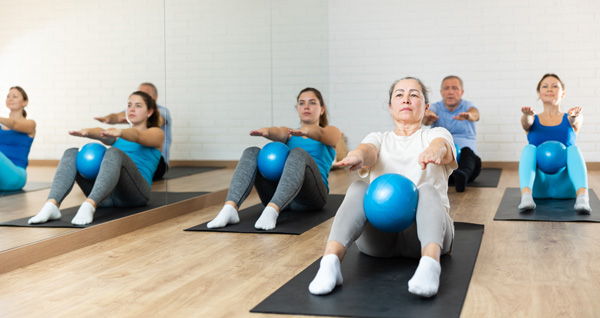
- Friday: Pilates – Focus on core, alignment, and the LPH complex to close the week strong.
- Saturday: Pilates or Yoga/Pilates Hybrid – Toning and control; a perfect time for “Yoga Conditioning” (as seen in Mariana Fernández’s Peloton classes), which incorporates weights into yoga flows for a total-body challenge.
Sunday: Active Recovery – A restorative yoga class, a long walk or a hike in nature to reset the nervous system.
The Takeaway: Beyond the Burn
True longevity is not found in the pursuit of a single fitness goal, but in the harmony of strength, precision, and recovery. While resistance training provides the foundation of life expectancy and metabolic health, Pilates and yoga provide the "secret sauce" that makes that strength sustainable and functional. As you plan your next move, ask yourself: How do I want my body to perform 20 years from now? By adopting this trifecta today, you aren't just exercising for the present; you are building a resilient, powerful vessel designed to carry you through the decades with ease.
Sources
There are the research papers, clinical reports, and professional articles used to draft the blog post:
- 7 Reasons Why Strength Training Is Key to Living Longer – AARP. https://www.aarp.org/health/healthy-living/strength-training-and-longevity/.
- Amp Expert Insight: How to Combine Strength Training and Yoga for Function and Flexibility – Amp Wellbeing.
- Does Yoga Build Muscle? – Peloton. https://www.onepeloton.com/blog/does-yoga-build-muscle.
- How Yoga, Strength Training and Pilates FIT Together – The Well Studio Dublin.
- How to Design a Balanced Week of Workouts – Kristin McGee Movement.
- If you lift weights, you should do yoga or pilates! – Fit for Life, Physical Therapy.
- Recovery Done Right: How Yoga Helps Your Muscles Heal Faster – The Yoga Collective. https://www.theyogacollective.com/recovery-done-right-how-yoga-helps-your-muscles-heal-faster/.
- The Acute Effect of Pilates Exercise on Lower Extremity Maximal Strength – International Journal of Exercise Science. http://www.intjexersci.com.
- Why Olympic Athletes Are Turning to Pilates for Their Training – Elemental.
- Why Weight Training & Pilates are a Perfect Match – O2 | Yoga. www.o2life.com.