
How do I fit in cardio without burning out?
TL;DR
This article advocates for a mindful approach to cardiovascular exercise, positioning it as a vital supplement to strength training rather than an exhausting chore. The author, Cassie Phillips, head trainer at The Well Studio, in Dublin, CA, emphasizes that improving aerobic capacity is a key predictor of long-term health and vitality, helping the body recover more efficiently from physical stress. Instead of long, grueling sessions, Cassie suggests integrating brief movement periods, such as ten-minute "bookends" around a workout or short high-intensity bursts between lifting sets.
Hi friends! As a trainer at The Well Studio, I get a lot of questions about cardio. In our community, we often focus on the foundational power of lifting weights, the alignment of a Pilates flow, or the deep release of a yoga practice. But lately, a common question has been surfacing: “How do I fit in cardio without burning out?”
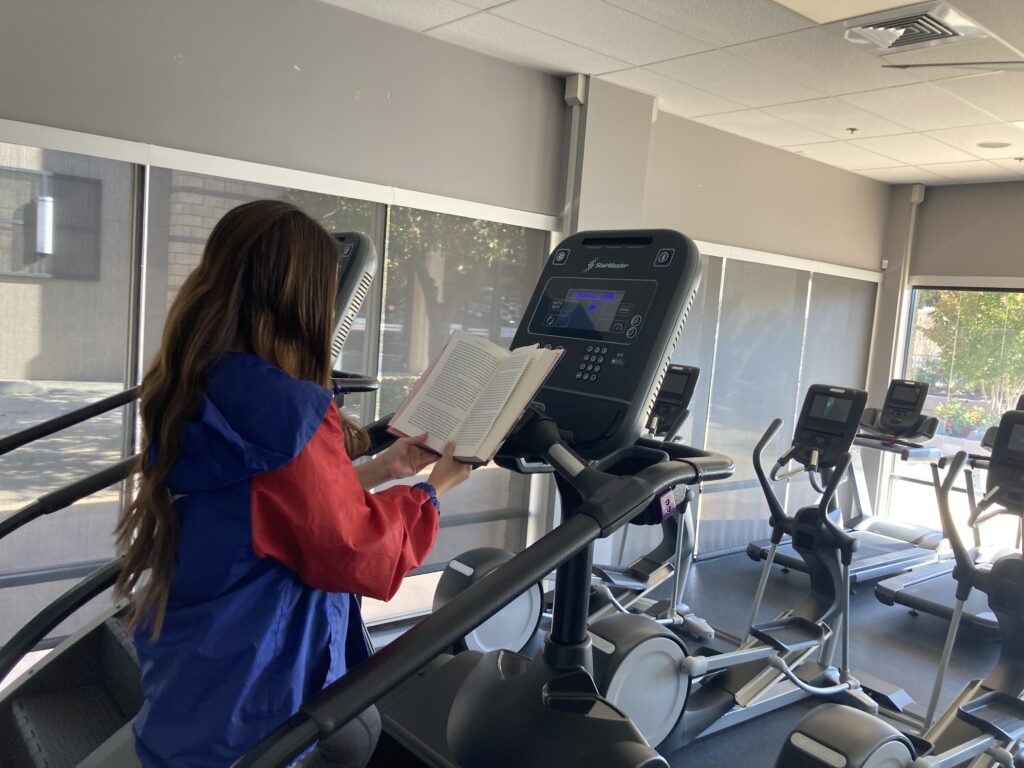
Many of us grew up in the era of “more is more.” I have good news! The days of spending 60 minutes of soul-crushing time on an elliptical, watching the calorie counter climb while our energy plummeted is OVER! We’re here to officially retire that narrative.
At The Well Studio, we believe weight training is the main event. It builds the muscle mass and bone density essential for metabolic health. However, cardiovascular training is the vital supplement; the support system that keeps your heart resilient and your engine running efficiently as you age.
1. Why Cardio is the Ultimate Longevity Supplement
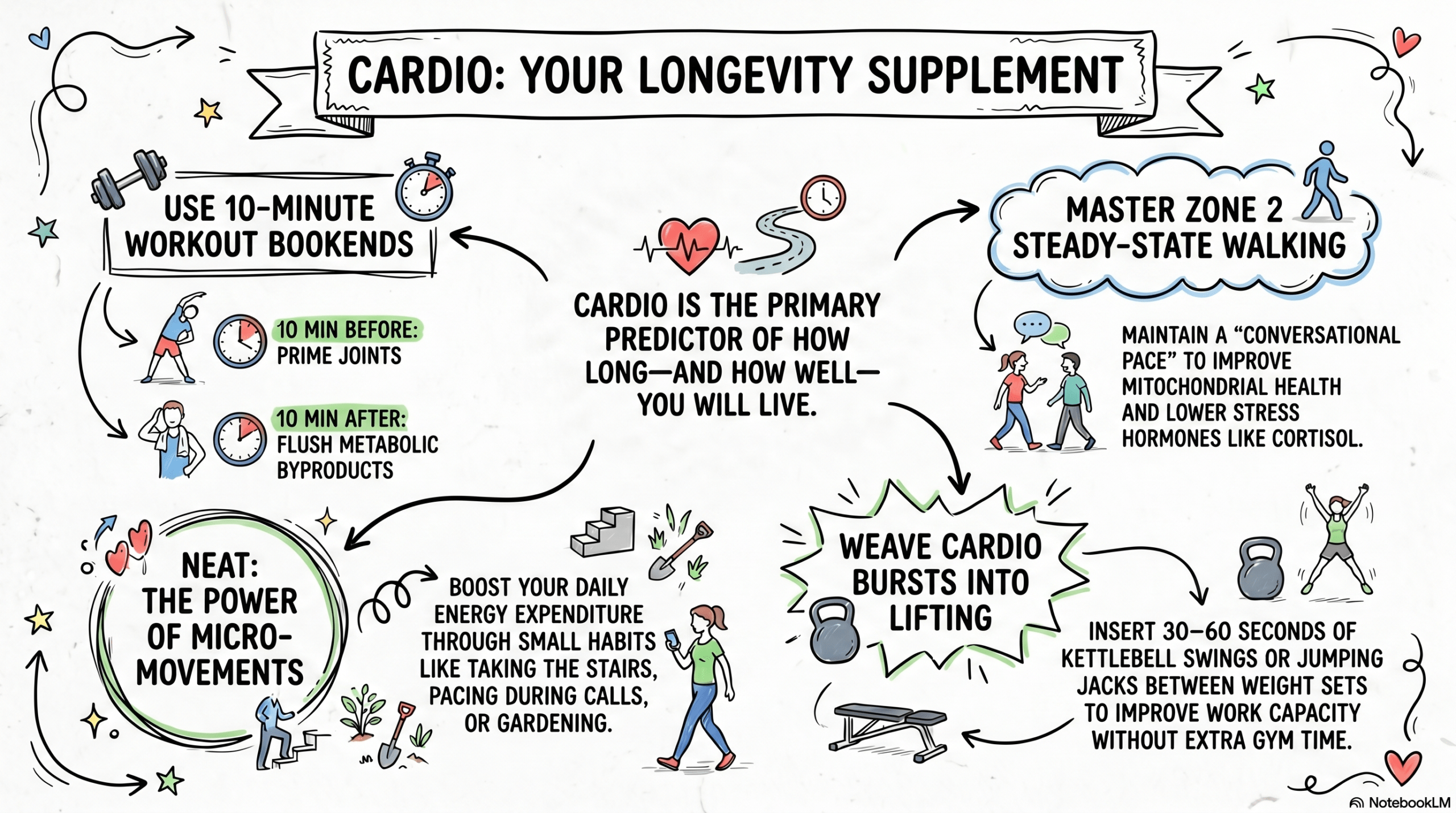
As we age, our aerobic capacity (VO2 max) naturally declines. This isn’t just about how fast you can run; it’s a primary predictor of how long, and how well, you will live. Maintaining your “cardiac output” ensures that your muscles receive oxygen-rich blood, helping you recover faster from your strength sessions and keeping your brain sharp.
While advising clients, these pillars of cardio are the direction I led them to sneak more heart pounding work in, without too much more time or effort:
- 10 more minutes
- Walking
- NEAT
- Burst training
Instead of viewing cardio as a way to “burn off” your day, view it as a way to invest in your future self.
2. Working Smarter: The 10-Minute Bookend
You don’t need an extra hour. You need intention. Arriving just 10 minutes early for your session or staying 10 minutes after to hop on a rower, bike, or treadmill can create a massive physiological shift over time.
- The Pre-Session Warm-Up: 10 minutes of light cardio primes your central nervous system and increases blood flow to the joints.
- The Post-Session Flush: 10 minutes of steady movement helps clear metabolic byproducts from your muscles, kickstarting your recovery before you even leave the studio.
3. The Magic of Zone 2 and the Non-Negotiable Walk
We often think cardio has to be breathless to “count.” Science tells us otherwise. Zone 2 cardio is steady-state exercise where you can still maintain a conversation (nasal breathing is a great gauge here).
Zone 2 training improves mitochondrial health, making your body better at burning fat for fuel and increasing your overall endurance. The most accessible form of Zone 2? Walking. Walking is non-negotiable. It’s low-impact, lowers cortisol (the stress hormone), and provides a “moving meditation” that aligns perfectly with a mindful lifestyle. It’s not just a way to get from A to B; it’s a fundamental pillar of health!
4. NEAT: The Secret Ingredient
Beyond your scheduled workouts lies NEAT: Non-Exercise Activity Thermogenesis. This represents the energy we expend for everything we do that isn’t sleeping, eating, or sports-like exercise.
How to boost your NEAT:
- Take the stairs instead of the elevator.
- Stand or pace during phone calls.
- Garden or work on your landscaping.
- Carry your groceries instead of using the cart.
These small “micro-movements” add up significantly over a week, often contributing more to your total daily energy expenditure than a 45-minute gym session!

5. Integrating "Bursts" into Strength Training
If your to-do list is already overflowing, don’t add a separate cardio day. Simply weave cardio bursts into your existing weight training. This is the definition of working smarter.
Between your heavy sets, try 30–60 seconds of:
- Kettlebell swings
- Mountain climbers or standing high knee marches
- Jumping jacks
- Step-ups
This keeps your heart rate elevated, improves your “work capacity,” and eliminates the need for extra hours in the gym.
The Takeaway
Your movement should support your life, not consume it. Use cardio as the tool to keep your heart as strong as your spirit!
Sources
- On Longevity & VO2 Max: Mandsager, K., et al. (2018). “Association of Cardiorespiratory Fitness with Long-term Mortality Among Adults Undergoing Exercise Treadmill Testing.” JAMA Network Open. (Higher fitness levels are associated with a significant reduction in all-cause mortality).
- On Zone 2 & Mitochondria: San-Millán, I., & Brooks, G. A. (2019). “Assessment of Metabolic Flexibility by Means of Measuring Blood Lactate, Fat, and Carbohydrate Oxidation Responses to Exercise in Professional Endurance Athletes and Less-Fit Individuals.” Sports Medicine.
- On NEAT: Levine, J. A. (2002). “Non-exercise activity thermogenesis (NEAT).” Best Practice & Research Clinical Endocrinology & Metabolism.