
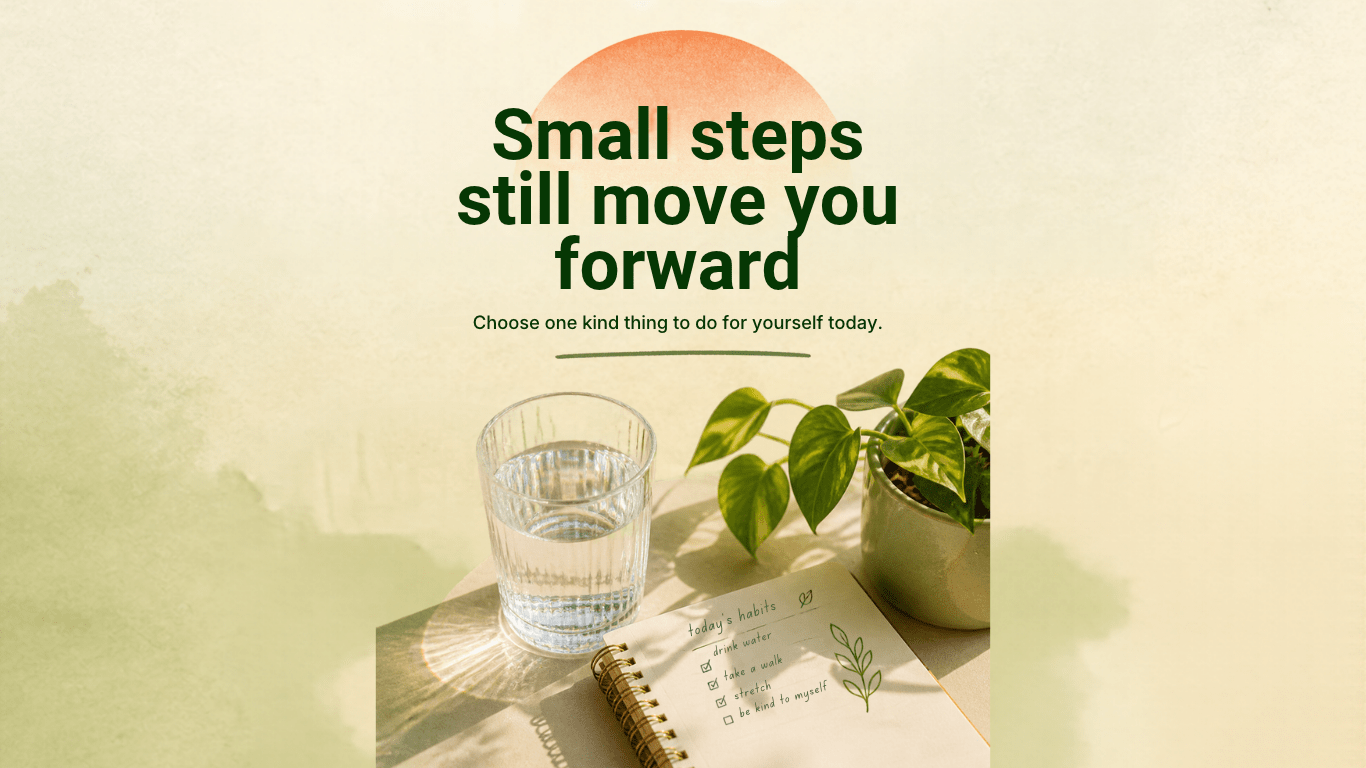
Small Steps, then a Consistent Routine. Listen to your Body.
TL;DR If you have stepped into a movement studio, opened a health app, or scrolled through social media recently, you have likely encountered a quiet, persistent burden. It usually starts with a sincere, positive desire: you want to feel better in your body, move with greater ease, protect your long-term health, or simply wake up each morning with energy and clarity. But within days of embarking on a wellness journey, that hopeful spark is frequently eclipsed by a heavy wave of anxiety and confusion.
Every single day, we are bombarded by alarming news headlines and public health warnings detailing thousands of chronic illnesses, rare diseases, and modern health risks. Simultaneously, the wellness industry inundates us with a dizzying array of solutions: hyper-complex biohacking protocols, intricate fasting schedules, specialized supplement regimens, cold plunges, infrared therapy, and constantly shifting dietary rules. What began as a simple intent to care for yourself quickly transforms into a daunting, second full-time job.
In our studio, a question we hear from students that is deeply vulnerable: “Why does getting well feel so overwhelming?”
If you have ever voiced this frustration or felt stuck before even getting started, please know this: you are not failing, nor do you lack discipline. You are experiencing a very natural biological and psychological response to modern information overload. The trick to breaking free from this paralysis is not discovering another complicated protocol—it is learning how to filter the noise, evaluate your options with curious detachment, and return to the simple, evidence-based physical basics that human biology has always depended upon.
Sifting through all of the noise is probably the hardest part. Find what works for you and stick with it!
1. The Psychology of Overwhelm: Decision Fatigue and Wellness Paralysis
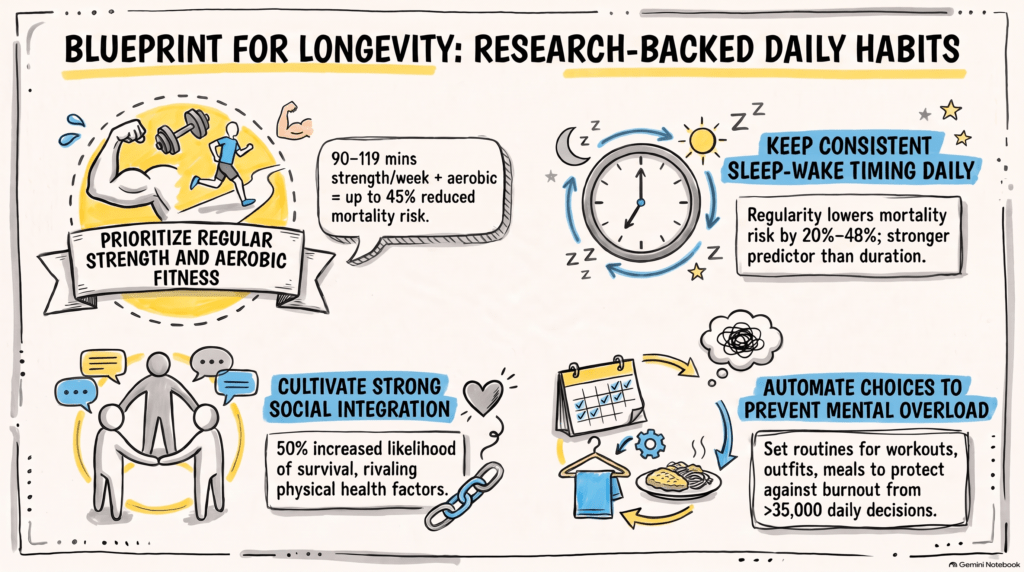
To understand why modern health culture feels so exhausting, we must examine how the human brain processes everyday choices. From the moment we wake up, we navigate a continuous stream of decisions: what to wear, what to eat, how to respond to work messages, and how to manage our households. Research highlighted in an extensive American Medical Association guidance on decision fatigue demonstrates that the average adult makes upwards of 35,000 decisions every single day. This relentless cognitive demand steadily depletes our mental reserves, leading to a state of profound decision fatigue.
When decision fatigue takes hold, the brain instinctively looks for cognitive shortcuts to conserve energy. In the context of personal health and wellness, this mental exhaustion manifests in four predictable patterns:
- Procrastination: Putting off health-supportive actions because analyzing where or how to begin feels completely insurmountable.
- Impulsivity: Chasing trendy wellness products or quick-fix supplements based on dramatic marketing claims rather than sound evidence.
- Avoidance: Disengaging from health conversations entirely because the mental bandwidth required to process them is exhausted.
- Indecision: Spending hours debating conflicting wellness advice without ever taking meaningful action.
The contemporary wellness landscape intensifies this fatigue by framing health as a matter of relentless micro-optimization. We are frequently told that unless we drink our morning water at a precise temperature, track our heart-rate variability continuously, or eliminate major macronutrient categories, we are failing our bodies. This hyper-vigilance transforms everyday self-care into a source of ongoing stress.
How to “Hear” Your Options Without Feeling Paralyzed
Overcoming wellness overwhelm requires a fundamental shift in perspective. You do not need to adopt every health trend, biohack, or dietary philosophy that crosses your radar. Instead, imagine standing in a vibrant studio or community center…let’s say The Well Studio. You can listen to the various conversations taking place, observe different classes, and respect the variety of tools available—all without feeling obligated to participate in every session or take every tool home with you.
When you encounter new health advice or wellness trends, practice filtering them through three simple, grounding criteria:
| Evaluation Lens | Key Question to Ask Yourself | Core Alignment Objective |
|---|---|---|
| Sustainability | Can I realistically see myself maintaining this habit six months from now? | Values steady, long-term consistency over short-term intensity. |
| Simplicity | Does this practice add genuine calm to my life, or extra mental stress? | Ensures wellness reduces daily burden rather than adding to it. |
| Biological Relevance | Is this fulfilling a fundamental human physiological need? | Grounds your effort in proven biological foundations. |
By viewing health information as a broad collection of possibilities rather than a rigid checklist of obligations, you restore your personal agency. You can acknowledge that a specific practice might be fascinating or beneficial for someone else while deciding, with complete confidence, that it is not what your body needs today. LISTEN TO YOUR BODY!
2. Movement as Medicine: Weight Lifting, Yoga, and Daily Walking
When we strip away the hype surrounding modern fitness trends, physical movement stands out as the most accessible and transformative medicine available to human biology. You do not need grueling, high-intensity workouts that leave you exhausted for days to achieve profound health benefits. Instead, sustainable movement is built upon three foundational practices: strength training, mobility work, and steady daily walking.
The Biological Necessity of Strength Training
Skeletal muscle is far more than tissue for physical movement; it functions as an active endocrine organ that helps regulate blood glucose, maintain metabolic rate, protect skeletal integrity, and buffer against cognitive decline as we age. According to a landmark Harvard Health analysis of long-term exercise data, engaging in just 90 to 119 minutes of resistance training per week is linked to a 13% reduction in all-cause mortality, a 19% lower risk of cardiovascular disease, and a impressive 27% lower risk of dying from neurological conditions such as dementia.
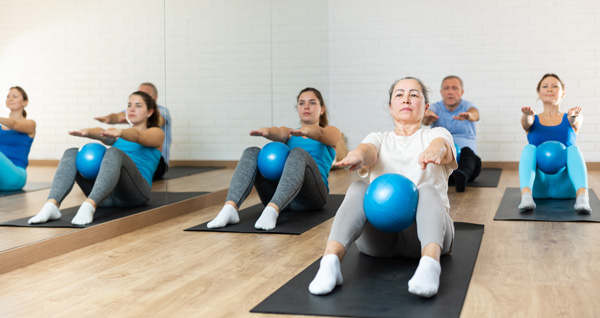
Strength training does not require intimidating gym equipment or hours of complex lifting. Fundamental compound movements—such as squats, bodyweight push-ups, lunges, carrying groceries, or using resistance bands—send a clear biological signal to your nervous and muscular systems to remain strong, resilient, and capable throughout life. This is the basis for how we have structured our strength circuit classes at The Well Studio!
Yoga and Mobility: Regulating the Nervous System
If strength training builds the structural frame of the body, yoga and mobility practices ensure that the frame moves smoothly and remains free from chronic tension. Physical tightness is often the biological storage of emotional stress and mental strain. Engaging in yoga, mindful stretching, and controlled breathing restores joint mobility while directly stimulating the vagus nerve, down-regulating the body’s sympathetic “fight-or-flight” stress response.
Yoga invites us to inhabit our physical form with awareness rather than criticism. A gentle 15-minute daily practice releases muscle tightness, improves posture, and fosters a calm mental focus that extends into every aspect of daily life.
Daily Walking and Nature Exposure: The Ultimate Baseline
Walking is the most natural, instinctual movement available to us. It requires no specialized equipment, places minimal stress on joint recovery, and offers significant cardiovascular and neurological benefits.
When you walk outside in green spaces or natural sunlight, these benefits multiply. Natural environments lower circulating stress hormones, restore depleted mental focus, and help synchronize your internal circadian clock. Combining regular resistance training with daily brisk walking can reduce overall mortality risk by up to 45%. Walking outdoors is not merely physical exercise; it is an active reset for your mind and nervous system.
3. Whole Food Nourishment and Hydration: Stripping Away Processing
Nutrition is undeniably one of the most confusing topics in modern health. Dietary trends continuously cycle through carbohydrate restriction, fat elimination, rigid fasting windows, and complex rules. In the fitness setting, we often hear conversations about “macros”. However, when we evaluate comprehensive population data, the most effective nutrition guidance is strikingly simple: eat clean, real whole foods and maintain consistent hydration.
The Impact of Ultra-Processed Foods
Much of today’s health challenges stem not from eating incorrect ratios of macronutrients (aka “macros), but from the dominance of industrially processed foods in the modern diet. A comprehensive umbrella review published in The BMJ examining data from nearly 10 million participants established direct connections between high exposure to ultra-processed foods and 32 separate adverse health outcomes.
| Food Classification | Defining Characteristics | Documented Health Impacts |
|---|---|---|
| Ultra-Processed Foods | Formulated with industrial additives, emulsifiers, and broken food matrices | Associated with +50% CVD mortality, +48-53% mental health disorders, +40-50% diabetes risk |
| Real Whole Foods | Unprocessed, single-ingredient foods with intact natural fiber and nutrients | Nourishes gut microbiome, stabilizes blood sugar, reduces systemic inflammation |
The BMJ review demonstrated that diets high in ultra-processed products—such as packaged snacks, sugary drinks, mass-produced baked goods, and ready-to-eat meals—are directly tied to increased mortality, metabolic disorders, and mental health challenges. Industrial processing breaks down the natural food matrix, strips away beneficial fiber, and introduces chemical additives that disrupt gut microbiota and promote systemic inflammation.
Simple Whole Food Principles
Nourishing your body with clean, whole foods does not require complicated meal plans or restrictive deprivation. It simply means focusing your diet on foods that retain their natural form:
- Vegetables and Fruits: Abundant in natural fiber, essential vitamins, and protective antioxidants.
- Quality Protein Sources: Eggs, wild fish, poultry, lean meats, legumes, and seeds that support tissue repair and muscle maintenance.
- Complex Whole Carbohydrates: Oats, sweet potatoes, root vegetables, brown rice, and quinoa that supply steady, lasting energy.
- Healthy Fats: Extra virgin olive oil, avocados, nuts, and seeds that support hormone synthesis and brain function.
Complemented by adequate daily water intake, whole food nutrition provides your cells with the raw materials needed for optimal function. Hydration supports every metabolic process, from nutrient transportation to cognitive performance, making it one of the simplest ways to feel better immediately.
Back to the basics! One small step at a time.
And, if you’d like to go deeper into your nutrition choices, drop our friend Jill Daniels a line to connect.
4. Rhythmic Rest: Why Sleep Regularity Beats Hour Counting
In our effort to optimize health, sleep is frequently treated as something to be strictly measured or sacrificed. Many fitness trackers push us to achieve an exact eight hours of sleep every night, creating anxiety when our schedule or body falls short of that arbitrary mark. It’s a running joke in our house when my wife will ask me how I slept last night and I tell her that I need to check my sleep score to find out. It’s become a bit of a trap! And, recent sleep science reveals that we have been emphasizing the wrong metric.
The Power of Sleep Regularity
According to a major UK Biobank prospective cohort study in Sleep analyzing over 10 million hours of accelerometer data across 60,977 participants, sleep regularity—the day-to-day consistency of when you go to sleep and wake up—is a significantly stronger predictor of mortality risk than total sleep duration alone. If you use a Fitbit or the (newer) Google Health app…that would be your sleep efficiency score, not your sleep score.
The study revealed that participants with high sleep regularity achieved remarkable health protections:
- A 20% to 48% reduction in all-cause mortality risk compared to those with unpredictable sleep patterns.
- A 22% to 57% lower risk of cardiometabolic mortality.
- A 16% to 39% lower risk of cancer-related mortality.
Maintaining consistent sleep and wake times—even on weekends—anchors your body’s circadian rhythm. This biological clock regulates hormone production, cellular repair, memory consolidation, and metabolic balance far more effectively than irregular sleep of longer duration.
Building a Consistent Sleep Schedule
Rather than worrying about the exact number of sleep hours logged each night, prioritize cultivating a consistent daily sleep rhythm:
- Anchor Your Wake Time: Get up at the same time every morning to reinforce your circadian clock.
- Get Early Daylight: Step outside for natural sunlight exposure within 30 minutes of waking.
- Limit Late Artificial Light: Reduce screen exposure 1 to 2 hours before bed to encourage natural melatonin release.
- Create a Restful Environment: Keep your bedroom dark, quiet, and cool to support uninterrupted sleep.
A simple daily routine that can be a game changer for your health and overall wellness!
5. Supportive Community, Mindfulness, and Gratitude: The Biological Anchors
While physical movement, nourishment, and sleep form the structural foundation of vitality, human beings are inherently emotional and social creatures. Physical health cannot be separated from our psychological well-being and the strength of our personal relationships.
The Vital Role of Social Connection
In an era of digital connectivity, genuine, in-person human connection has become surprisingly rare. Yet, strong social integration is among the most powerful factors influencing human longevity.
A landmark meta-analysis in PLOS Medicine examining 148 prospective studies with over 308,000 participants concluded that individuals with robust social relationships have a 50% higher likelihood of survival over time compared to those experiencing social isolation. BOOM! That’s massive.
| Health Factor / Protective Lifestyle | Survival or Mortality Association | Contextual Health Comparison |
|---|---|---|
| Strong Social Integration | +50% Increase in Survival Odds | Demonstrated across 148 prospective studies |
| Quitting Smoking | Comparable Risk Reduction | Standard benchmark in public health |
| Physical Activity Baseline | Smaller protective magnitude than social ties | Vital physical habit |
| Obesity Avoidance | Smaller protective magnitude than social ties | Vital metabolic habit |
The researchers emphasized that the health benefit of social connection is equivalent to quitting smoking and exceeds the impact of well-known physical factors such as physical activity or maintaining a healthy weight. Gathering with a supportive community—whether at a local movement studio, a neighborhood walking group, or around the family dinner table—is not an optional luxury. It is a fundamental requirement for long-term health. We NEED our tribe! We NEED to feel a part of a community. We NEED connection!
Quick side story…when we started The Well Studio, we put a lot of our emphasis around building a supportive community. A Marketer we were working with at the time stated that “we can’t sell community” and shouldn’t be spending real estate on it as a topic online. That perspective was proved wrong in due time. Community IS the foundation of any thriving studio!
Mindfulness and Gratitude in Daily Life
Alongside social connection, practicing mindfulness and gratitude provides an essential emotional anchor amidst life’s daily demands:
- Mindfulness: Practicing present-moment awareness helps quiet mental noise, interrupting cycles of worry and stress.
- Gratitude: Taking time daily to acknowledge positive experiences rewires cognitive patterns, shifting focus from stress toward contentment and emotional balance.
Combining community support with daily gratitude fosters an internal sense of safety and calm, allowing your body and mind to truly rest and recover.
6. But, it's still feels overwhelming...
So, a few things to try before the big take-aways. These shouldn’t feel additive, but instead, regenerative. Remember, one step at a time…
- Ignore social media for a day
- Try a strength training class.
- Got to bed at the same time for 3 nights in a row.
- Try to do the exact same 3-4 “things” when you first wake up in the morning.
Start building a routine and try to sense what your body is telling you. Are you feeling any different? Carrying less tension? Is your mind any clearer?
Find a few little steps you can take that reduce the noise and get your started on a new routine that (better) supports your wellness!
The Takeaway: Simplicity as the Ultimate Self-Care
Achieving good health does not require radical lifestyle overhauls, expensive gadgets, or rigid perfectionism. When the abundance of wellness advice feels overwhelming, remember that your body is naturally designed to thrive when provided with basic, consistent care.
You do not have to try every health trend or follow every expert recommendation. Listen to the options, stay curious, but give yourself permission to focus on what truly matters:
1. Move daily: Combine strength training, gentle yoga or mobility, and outdoor walks.
2. Eat real food: Choose clean, whole ingredients, minimize ultra-processed items, and drink water regularly.
3. Keep a steady sleep routine: Go to bed and wake up at consistent times to align with your natural rhythms.
4. Nourish your mind and relationships: Connect with supportive people, practice gratitude, and embrace calm moments.
True well-being is not about doing everything right; it is about building a gentle, sustainable life rhythm. Pick one simple basic habit today—taking a walk, drinking a glass of water, or catching up with a friend—and let that simple step be your path forward. And, try not to get caught up in the "next big thing" that's touted as the best thing ever for your wellness. Get back to the basics. Keep it simple. Find a routine that works for you!