
The Ultimate Fitness Advantage: Why In-Person Private Training Is the Superior Choice for Yoga, Strength and Pilates
TL;DR
In the heart of Dublin, CA, we live in a famously "fit-conscious" culture. Whether it’s the early morning rush of cyclists on the Iron Horse Trail or the post-work crowd surging toward Hacienda Crossroads, the Tri-Valley is a community on the move. Yet, beneath this active exterior, many residents grapple with a common East Bay dilemma: the "fit-conscious" pressure. At The Well Studio, we’ve built a sanctuary that pivots away from the noise. While group fitness is the gold standard for motivation, recent psychosocial research suggests that for many, 1-on-1 personal training (PT) is the superior path for both physical breakthroughs and genuine mental peace of mind
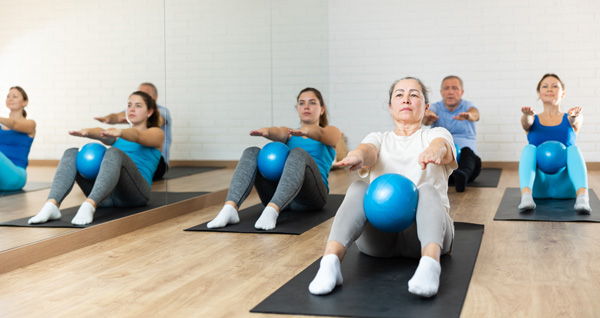
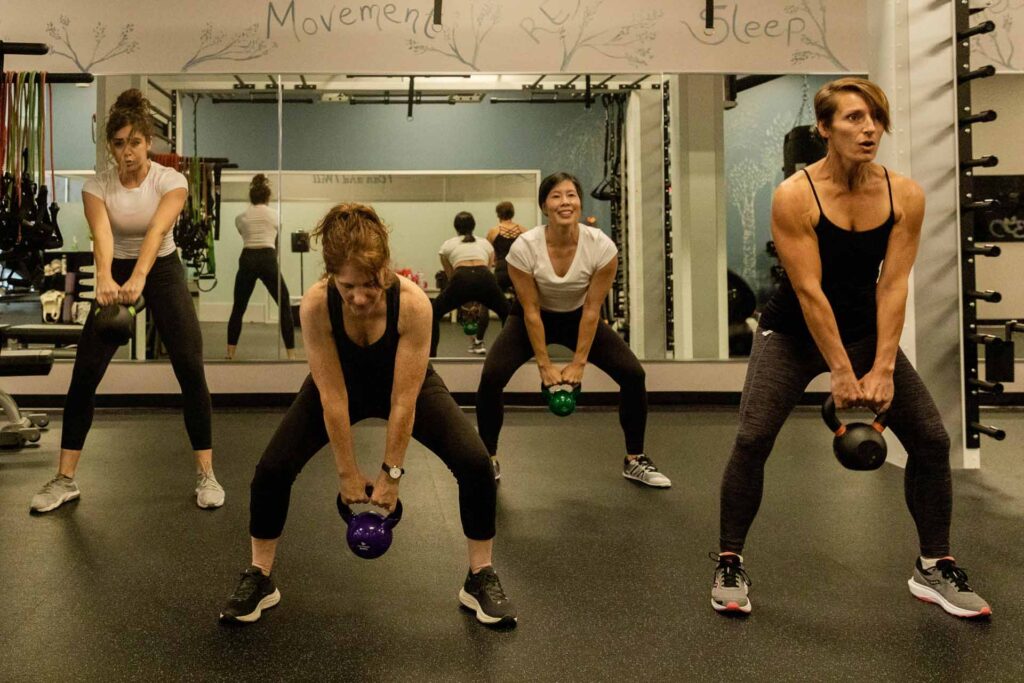
When it comes to achieving transformative health results, the choice between a crowded group class and a dedicated private session is one of the most critical decisions an exerciser can make. While group exercise classes are often popular for their social energy, scientific evidence and clinical consensus point toward in-person private training as the “gold standard” for safety, effectiveness, and long-term adherence. Whether you are engaging in high-intensity strength training, the precision of Pilates, or the somatic depth of yoga, the focused environment of a one-on-one session provides physiological and psychological benefits that a group setting simply cannot replicate.
1. The Science of Superior Results: Fat Loss and Strength Gains
The primary reason most individuals invest in personal training is to see measurable changes in their body composition and physical capability. Research comparing personal training to other forms of exercise shows a clear hierarchy of results. In a controlled 12-week study, researchers found that only the group trained by a personal trainer showed a significant enhancement in fat reduction compared to those exercising with partners or alone. Specifically, those with a personal trainer lost an average of 1.61 kg of fat mass, while other groups saw no statistically significant change.
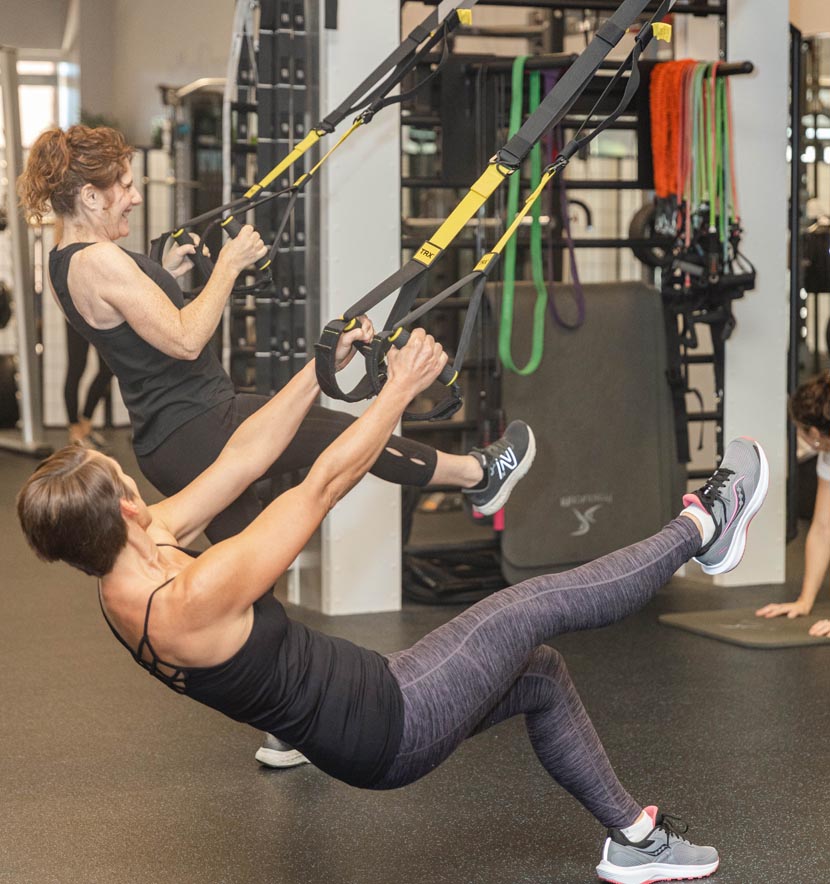
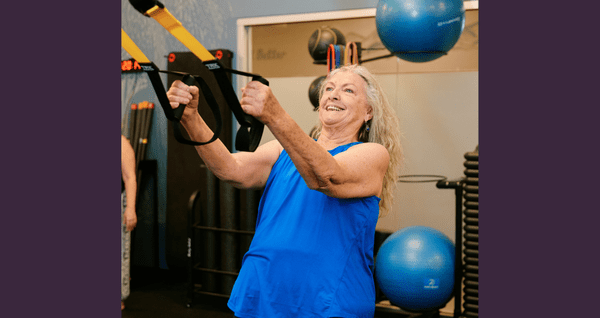
In the modality of strength training, the “empowering effect” of one-on-one supervision allows individuals to safely select higher intensities than they would ever choose for themselves. Working with a private trainer encourages participants to voluntarily choose weights that are significantly heavier than those training independently, leading to superior improvements in lean body mass and functional power. One-on-one supervision has been shown to increase specific strength markers, such as the squat, more effectively than unsupervised training.
2. Precision and Personalization in Pilates and Yoga
While group classes often follow a “one-size-fits-all” sequence, private training allows for an assessment of your unique postural imbalances and habitual patterns. In Pilates and yoga, where alignment and form are the foundations of the practice, the individualized attention of a private session is a game-changer.
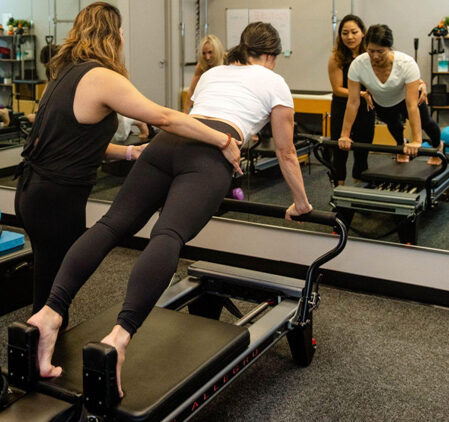
Private postural yoga is designed to minimize chronic aches and pains by bringing your specific body back into balance through a combination of stretching and targeted strengthening. In a private setting, a teacher can utilize hands-on adjustments, which are essential for helping you understand how your body should feel in proper alignment. This immediate feedback facilitates faster improvements in body awareness and allows for the subtle changes necessary for a deeper practice.
Furthermore, private sessions in these modalities often incorporate “Somatic Experience” techniques. This specialized approach focuses on the nervous system, allowing you to process stress, anxiety, or trauma through body sensations rather than just following a series of poses in a group. This level of psychological and physical integration is nearly impossible to achieve in a large group class where the instructor must divide their attention among dozens of students.
3. The Safety Shield: Minimizing Injury through Technical Coaching
Safety is perhaps the most significant advantage of in-person private training. In a group class, instructors often struggle to monitor every participant’s form, which can lead to improper movement patterns and an increased risk of injury. Research indicates that injury rates are lowest among trainees who work in 1-on-1 supervised environments compared to those who exercise alone or in group settings.
The most common injury-prone areas in fitness, such as the back, shoulders, and knees, are protected when a trainer is there to constantly adjust exercise intensity and movement standards. Trainees and trainers alike rate “technical coaching” as the most important characteristic of supervised exercise for preventing acute and chronic injury. Private training ensures that you achieve “unconscious competence”—the ability to perform complex movements correctly without thinking about them—which significantly lowers long-term injury risk.
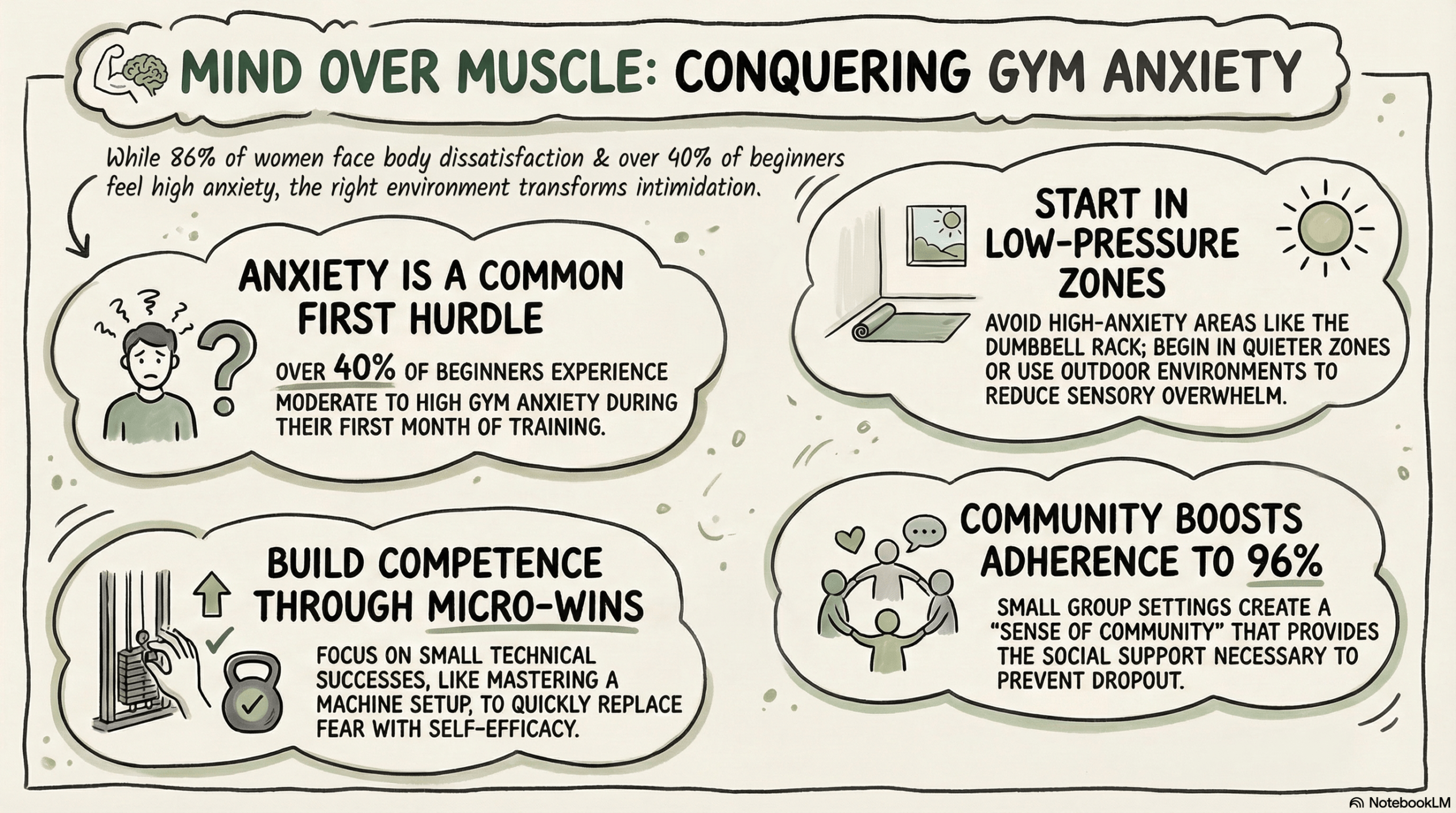
4. Conquering “Gym” Anxiety and Social Physique Anxiety
For many, the biggest barrier to exercise isn’t physical, but psychosocial. Social Physique Anxiety (SPA)—the distress associated with the perceived evaluation of one’s physical self by others—is a primary reason people avoid group classes. Research has shown that individuals with high SPA feel “psychosocially threatened” in environments where they are surrounded by “in-shape” companions, which often leads to increased pressure and tension.
In-person private training removes this threat by providing a judgment-free space where the focus is entirely on individual capability rather than comparison. Private sessions eliminate the negative effects of “upward social comparison,” where exercisers feel inferior when compared to more “fit-looking” individuals in a group class. By working one-on-one, you can build “self-presentational efficacy”—the confidence in your ability to convey an image of physical competence—in a safe, supportive environment.
5. Accountability and the "John Henry Effect"
Adherence is the “Achilles’ heel” of most fitness programs, with many participants dropping out within the first six months. Private personal training provides a unique form of empowerment through accountability. One study of breast cancer survivors found that highly supervised resistance training (1:1 ratio) led to an adherence rate of over 99%.
Moreover, private training triggers a motivational phenomenon known as the “John Henry Effect,” where the awareness of being observed by an expert encourages you to exert greater effort and maintain higher intensity throughout your session. In a group class, it is easy to “hide in the crowd” and reduce effort, but private training ensures you are pushing yourself to maximize results in every single session.
6. Holistic Lifestyle and Nutritional Guidance
A private personal trainer often evolves into a “fitness consultant,” offering guidance that extends far beyond the gym floor. These sessions are a rare opportunity to discuss health misinformation, stress management, and sleep quality with a professional who understands your specific history.
The most striking evidence of this holistic benefit is in the realm of nutrition. Studies show that only those working with a private personal trainer exhibit high adherence to nutritional plans. Because a trainer can provide consistent oversight and education regarding your diet, private clients are far more likely to stick to their nutritional targets than those in group settings who are left to their own devices.
7. Why Group Classes Fall Short for Complex Needs
Group exercise classes are inherently limited because they cannot account for the notable inter-individual heterogeneity in how people respond to exercise. Every person is a “responder” or “non-responder” to different modalities based on their genetics, age, and baseline health status. A group instructor cannot adjust the “dose-response” relationship for 20 different people at once.
For older adults or those with chronic conditions, this distinction is life-altering. General group classes often promote only mild activities that do not meet the intensities required for therapeutic benefit. Structured, supervised exercise should be treated like medical treatment, tailored to your specific functional deficits. If you have osteoporosis, a private trainer can prioritize high-load resistance training that specifically targets bone density, whereas a group class might focus on general movement that offers no therapeutic protection for your condition.
The Takeaway: Quality over Quantity
In-person private training is not just a luxury; it is an investment in exercise as medicine. While group classes offer a sense of community, they cannot provide the personalized precision, 50% injury reduction, and specific fat-loss results that are the hallmarks of one-on-one training. By choosing private sessions for your strength, yoga, or Pilates practice, you are ensuring that every minute you spend exercising is optimized for your unique body, your specific goals, and your long-term health. You are choosing to be seen, heard, and valued in a way that is only possible when you are the sole focus of a professional’s expertise. If you are ready to stop "participating" in fitness and start achieving it, the path forward is through in-person private training.
Sources
There are the research papers, clinical reports, and professional articles used to draft the blog post:
- A psychosocial investigation of exercise preferences in real and virtual environments (Moffitt, 2024): https://doi.org/10.1016/j.psychsport.2023.102530.
- Comparing the impact of personal trainer guidance to exercising with others: Determining the optimal approach (Lu, et al., 2024): https://pmc.ncbi.nlm.nih.gov/articles/PMC10828695/.
- Dimensional and social comparisons in a health fitness context (Rose, et al., 2024): https://pubmed.ncbi.nlm.nih.gov/37243916/.
- Evidence to Support the Effectiveness of Personal Training (Green, 2023 – ACE Fitness): https://www.acefitness.org/resources/pros/expert-articles/8556/evidence-to-support-the-effectiveness-of-personal-training/.
- Global consensus on optimal exercise recommendations for enhancing healthy longevity in older adults (ICFSR) (Izquierdo, et al., 2025): http://doi.org/10.1016/j.jnha.2024.100401.
- How the physical appearance of companions affects females with high or low social physique anxiety(Kroon, et al., 2022): http://hdl.handle.net/10072/420072.
- Impact of physical exercise interventions on functional fitness in older adults (Chen, et al., 2026): https://www.frontiersin.org/articles/10.3389/fmed.2025.1732129/full.
- Incorporating a Sense of Community in a Group Exercise Intervention Facilitates Adherence (Heinrich, et al., 2022): https://newprairiepress.org/hbr/vol5/iss3/1.
- Individual Versus Group Therapy for Obesity: Effects of Matching Participants to Their Treatment Preferences (Renjilian, et al., 2001): https://doi.org/10.1037//0022-006X.69.4.717.
- Internal vs. External Cueing: How to Help Your Clients Move More Efficiently and Effectively (Cain, 2019 – ACE Fitness): https://www.acefitness.org/resources/pros/expert-articles/7324/internal-vs-external-cueing-how-to-help-your-clients-move-more-efficiently-and-effectively/.
- Once a Week Resistance Training Improves Muscular Strength in Breast Cancer Survivors (Santos, et al., 2019): https://doi.org/10.1177/1534735419879748.
- Private Yoga in Boston (Amy Leydon Yoga/Soma Yoga Center): http://www.somayogacenter.com.
- Supervision during Resistance Training: A Comparison of Trainer and Trainee Perceptions (Fisher, et al., 2023): https://doi.org/10.47206/ijsc.v3i1.256.
- The Role of Social Physique Anxiety, Social Support, and Perceived Benefits and Barrier to Exercise…(Easton, 2013): https://digitalcommons.georgiasouthern.edu/etd/34.
- How to Overcome Gym Anxiety: A Personal Trainer’s Guide (The Fitness Group): https://thefitnessgrp.co.uk/.