

Whole-Body Vibration: Science, Benefits, and Best Practices
TL;DR
Vibration plates utilize rapid mechanical oscillations to trigger the tonic vibration reflex, which can recruit up to 95% of muscle fibers. This high efficiency allows a 10-minute session to provide benefits comparable to 30–40 minutes of traditional weight training. Key health insights include bone & lymphatic health, weight loss & recovery and versatile training that is accessible by most all fitness levels.
Whether you have seen them in some gym, in the home offices of health-conscious professionals or on the floor at The Well Studio, vibration plates—also known as Whole-Body Vibration (WBV) platforms—have moved from a niche fitness trend to a scientifically-backed wellness tool. Originally developed to combat the loss of bone and muscle mass in astronauts spending extended time in space, this technology is now used to improve bone density, accelerate recovery, and enhance lymphatic health for the general population.
Now, let’s dig into the mechanics of vibration therapy, the wide-ranging health benefits it offers, and how you can safely integrate it into your fitness routine!
1. What is Whole-Body Vibration?
Whole-Body Vibration involves standing, sitting, or performing exercises on a platform that oscillates at specific frequencies, typically between 5 Hz and 50 Hz. These rapid mechanical oscillations transmit energy throughout the body, forcing the musculoskeletal system to adapt.
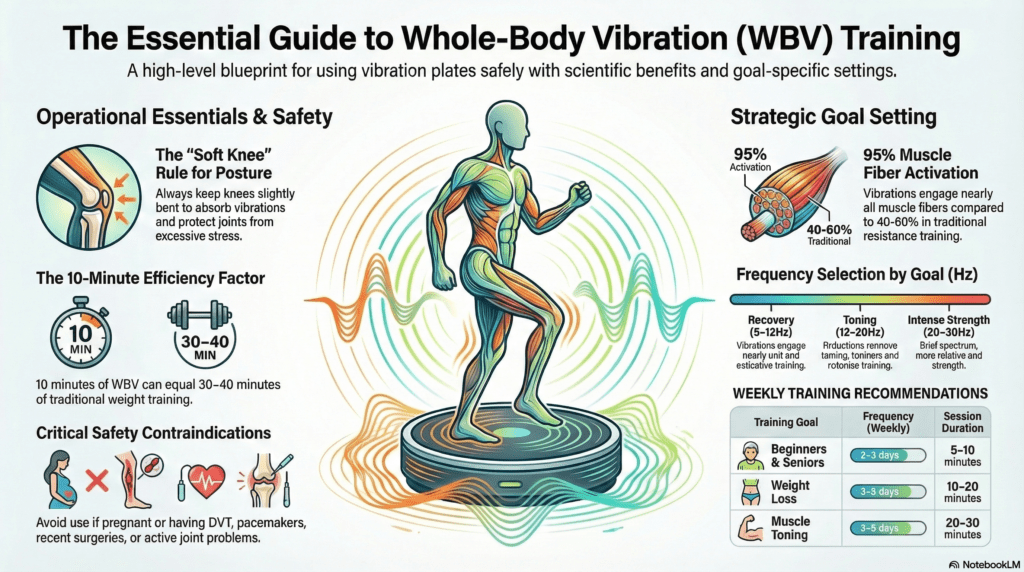
The primary mechanism at play is the tonic vibration reflex. Because the plate is moving rapidly beneath you, your muscles must contract and relax reflexively to maintain balance and posture. While traditional strength training might engage 40–60% of your muscle fibers, WBV can recruit up to 95% of muscle fibers as they fire involuntarily to stabilize your joints against the vibration. This intense activation is why many experts suggest that 10 minutes on a vibration plate can provide benefits comparable to 30–40 minutes of conventional weight training.

2. Key Insights on Health Benefits
Bone Density and Osteoporosis Management
One of the most clinically significant benefits of WBV is its impact on bone mineral density (BMD). The mechanical energy from the plate mimics the effects of weight-bearing exercise; as muscles pull on the bone during these rapid contractions, it sends signals to the body to build new bone tissue.
- Post-Menopausal Support: Research indicates that WBV is uniquely effective for increasing bone density in post-menopausal women aged 60–70 years.
- Osteoblasts Activation: The therapy promotes the natural production of osteoblasts, the cells responsible for forming new bone.
- Setting Tip: For bone density goals, high-frequency vibrations (20–30 Hz) are recommended.
Lymphatic Drainage and Detoxification
Unlike the circulatory system, which has the heart to pump blood, the lymphatic system relies on muscle movement and breathing to move fluid. Vibration plates act as a mechanical pump for this system.
- Fluid Movement: The quick, automatic muscle contractions create pressure changes in the tissues, pushing “stuck” lymph fluid out from between cells and into the lymph channels.
- Reducing Edema: This makes WBV a valuable tool for those dealing with chronic swelling or lymphedema, as it helps clear metabolic waste and toxins from the tissues.
- Setting Tip: For lymphatic drainage, low-frequency settings are most effective, as high frequencies may actually constrict lymph flow.
Muscle Recovery and DOMS Prevention
High-performance athletes, including the German National Football Team, have famously used vibration technology to stay in peak condition.
- Reducing DOMS: Studies show strong evidence that WBV reduces the effects of Delayed Onset Muscle Soreness (DOMS). It does this by increasing blood flow to the tissues, which helps clear lactate and initiates a healing response.
- Biological Markers: Research found that users of WBV had lower levels of Creatine Kinase (CK) and Lactate Dehydrogenase—blood markers that signify muscle damage—after intense exercise compared to those who didn’t use vibration.
Weight Loss and Metabolic Support
While a vibration plate is not a “magic pill” for weight loss, it significantly increases the metabolic cost of your workout.
- Calorie Burn: Because your muscles are working much harder to maintain stability, you burn more calories during simple movements (like a squat) on a plate than you would on solid ground.
- Fat Mass Reduction: A systematic review found that WBV therapy has a significant effect on reducing total fat mass in kilograms over a 6-to-24-week period.
3. How to Use a Vibration Plate Safely
To reap these benefits without injury, proper technique is essential.
Postures and Stance
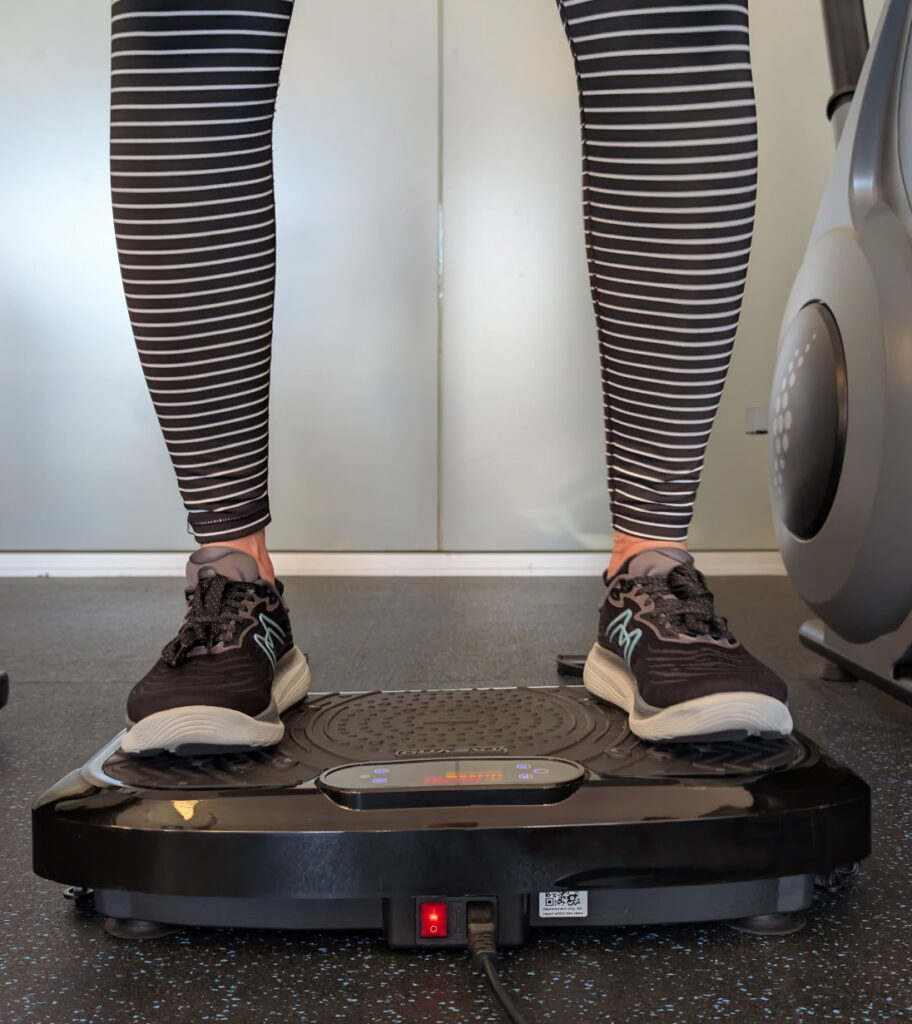
- Never Lock Your Knees: This is the most critical safety rule. Always stand with knees slightly bent to absorb the vibrations and protect your joints. Locking your knees can lead to joint pain or dizziness.
- Engage Your Core: Keep your abdominal muscles braced. This stabilizes your body on the moving platform and protects your lower back.
- Equal Weight Distribution: Ensure your weight is centered and balanced across the surface of the plate so the vibrations are distributed equally to all muscles.
Duration and Frequency
- Beginners: Start with sessions of 5–10 minutes, two to three times per week.
- Progression: As your body adapts, you can increase to 10–15 minutes. Most people can eventually use the plate 3–7 days per week, depending on their intensity levels.
- Hydration: Always drink water before and after a session. The increased circulation and muscle activity can lead to rapid dehydration.
4. Specific Exercises to Maximize Results
Simply standing on the plate provides benefits, but adding movement “unlocks” its full potential.
Lower Body
- Squats: Perform standard or deep squats while standing on the plate. The vibrations engage more muscle fibers, making the movement far more intense.
- Lunges: Place one foot on the plate. The instability forces your leg muscles to work harder to maintain balance.
- Calf Raises: Targeted raises on the plate are excellent for improving lower-leg circulation and strength.
Core and Abdominals
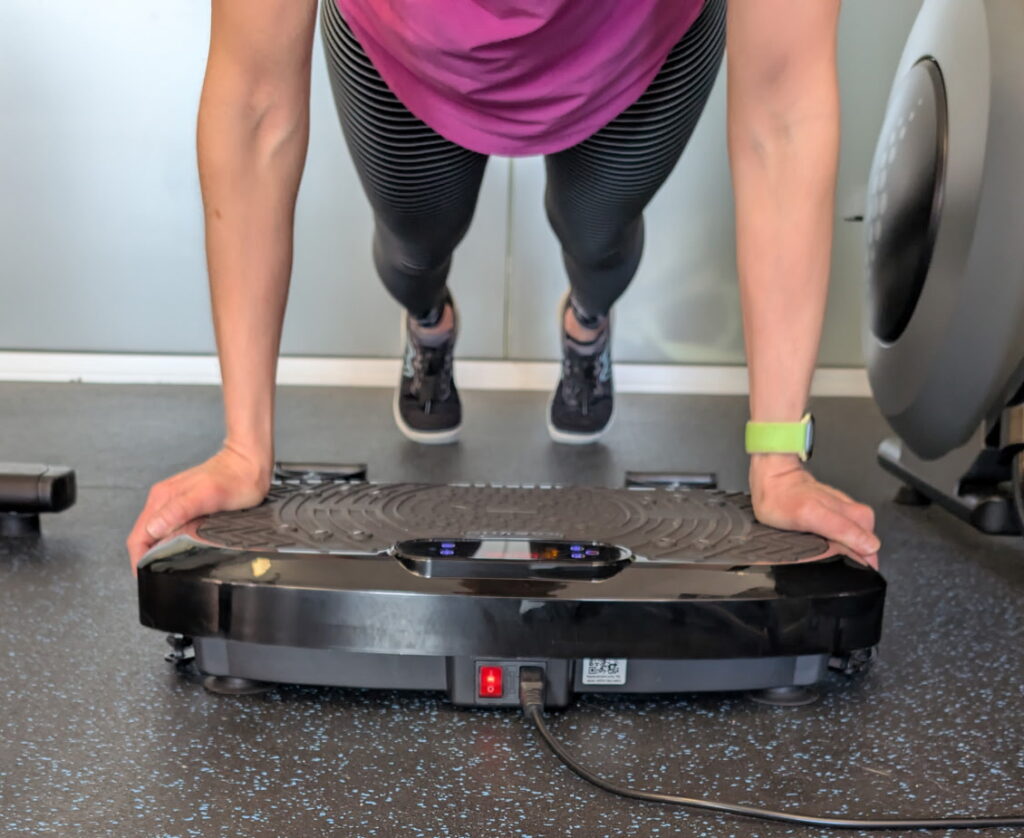
- Planks: Place your forearms or hands on the vibration plate. This adds a massive challenge to your core stability and upper body strength.
- V-Sits: Sit on the plate, recline slightly, and lift your feet off the floor. This forces your deep stabilizers to fire to keep you balanced.
- Mountain Climbers: With hands on the plate, bring your knees toward your chest. This is a high-intensity move that builds endurance.
Upper Body
- Push-ups: Placing your hands on the plate adds a dynamic challenge to the chest, shoulders, and triceps.
- Triceps Dips: Use the edge of the plate for dips to tone the back of the arms.
Stretching and Massage
The plate is also a fantastic recovery tool. You can sit or lie near the plate and place your calves, hamstrings, or quadriceps directly on it for a deep-tissue massage that increases blood flow and relieves stiffness.
5. Who Should NOT Use a Vibration Plate?
While generally safe, WBV is a powerful mechanical stimulus and should be avoided by certain groups without medical clearance. Do not use a vibration plate if you:
- Are pregnant (vibrations can affect ligament laxity and internal pressures).
- Have a pacemaker or other electronic implants (mechanical stimulation can interfere with these devices).
- Have a history of blood clots or Deep Vein Thrombosis (DVT), as increased circulation could potentially dislodge a clot.
- Have acute inflammation, fresh surgical wounds, or serious heart conditions.
- Have severe osteoporosis or a history of spinal fractures.
6. Choosing the Right Equipment
If you are looking to purchase a machine for home use, consider these key specifications:
- Frequency Range: Look for a machine that offers a range between 20 Hz and 45 Hz for the best balance of safety and efficacy.
- Plate Size: A larger, rigid plate offers more room for varied exercises like planks and side lunges.
- Vibration Type: Pivotal (see-saw) vibration often provides higher acceleration and a more natural movement pattern for the hips, while linear (vertical) vibration is excellent for muscle activation.
Build Quality: Look for a robust frame and a non-slip surface to ensure safety during intense movements.
We recently added a vibration plate at home and took the time to sift through consumer reviews and quality rankings. Ultimately, we landed on one from EvoSpark, which is easily accessible via Amazon and offers “4-D” vibration capabilities; front to back and side-to-side movement for maximum “shaking”!
The Takeaway
Whole-body vibration is a scientifically validated way to enhance your physical health in a fraction of the time required by traditional methods. By acting as a pump for your lymphatic system, a stimulus for your bones, and a recovery tool for your muscles, it offers a truly holistic approach to wellness.
The key to success is consistency. Whether you are using it for a 10-minute morning session to wake up your circulation or as a high-intensity "finisher" for your core workout, the cumulative effects on your stability, strength, and overall health can be life-changing.
Disclaimer: Always consult with a healthcare professional before starting any new exercise program, especially if you have pre-existing medical conditions.
Sources
Primary Clinical Reviews and Meta-Analyses
- Osteoporosis Management Review: “Whole-Body Vibration Therapy as a Modality for Treatment of Senile and Postmenopausal Osteoporosis: A Review Article.” Available at: https://pmc.ncbi.nlm.nih.gov/articles/PMC9925023/.
- Fat Mass Reduction Meta-Analysis: “The effects of whole body vibration therapy on reducing fat mass in the adult general population: A systematic review and meta-analyses.” Available at: https://pmc.ncbi.nlm.nih.gov/articles/PMC6944803/.
- Muscle Recovery and DOMS Review: “Effects of Vibration Training on Muscle Recovery and Exercise Induced Soreness: A Systematic Review”. While a direct permalink is not listed in the snippet, this article is documented in the Semantic Scholar and PubMed databases.
Specific Research Study URLs Found in the Sources
- Immune and Brain Functioning: https://pmc.ncbi.nlm.nih.gov/articles/PMC11323691/.
- Muscle Strength in Older Adults: https://pmc.ncbi.nlm.nih.gov/articles/PMC10342949/.
- Chronic Low Back Pain Management: https://pmc.ncbi.nlm.nih.gov/articles/PMC10523661/.
- Metabolic Disease Clinical Utility: https://pmc.ncbi.nlm.nih.gov/articles/PMC11396361/.
- Sarcopenia and Physical Function: https://pmc.ncbi.nlm.nih.gov/articles/PMC7499918/.
- Post-Stroke Spasticity: https://www.frontiersin.org/articles/10.3389/fneur.2023.1074922/.
- Delayed-Onset Muscle Soreness (JAT): https://www.ncbi.nlm.nih.gov/pmc/articles/PMC3017487/.
- Bone Health in Postmenopausal Women: https://www.ncbi.nlm.nih.gov/pmc/articles/PMC6112924/.
- Vibration Therapy Clinical Commentary: https://www.ncbi.nlm.nih.gov/pmc/articles/PMC9528696/.
- Diabetic Skin Blood Flow Responses: https://www.frontiersin.org/articles/10.3389/fbioe.2019.00310/.
Expert Insight and Safety Resources
- Lymphatic Health Insights: “Vibration Plate Benefits for Lymphatic Drainage: Yay or Nay?” by Kelly Sturm, PT, DPT, published at Cancer Rehab PT.
- Core Strength and Training: “Vibration Plate Core Exercises | How To Train Abs, Stomach & Back Safely” provided by the Hypervibe Team.
- Foundational Safety and Tips: “8 Tips On How to Use a Power Plate Machine Properly” by David Johnson at Zelus Fitness.
- Comprehensive Exercise Protocols: “Vibration Plate Exercises eBook” by Dr. Mohsen Kazemi, D.C., at the DoctorK Toronto Chiropractor Clinic.
Safety and Contraindications Guide: “Who Shouldn’t Use Vibration Plates – Can They Be Dangerous?” medically reviewed by David M. Joyner, MD, at Power Plate.